

Digital Colliers Daily Briefing — June 5, 2026
Three stories today sit at the intersection of capability, control, and consolidation: Anthropic publishing internal numbers that frame current AI development as already self-accelerating, WIRED's discovery of a fully assembled — though dormant — facial recognition pipeline on 50 million phones running Meta's smart-glasses companion app, and Cloudflare absorbing VoidZero, the company stewarding the JavaScript ecosystem's most widely depended-on build toolchain. Each event reshapes a different layer of the stack: model labs, consumer biometrics, and developer infrastructure.
1. Anthropic publishes internal metrics on AI building AI, asks frontier labs to consider a coordinated pause
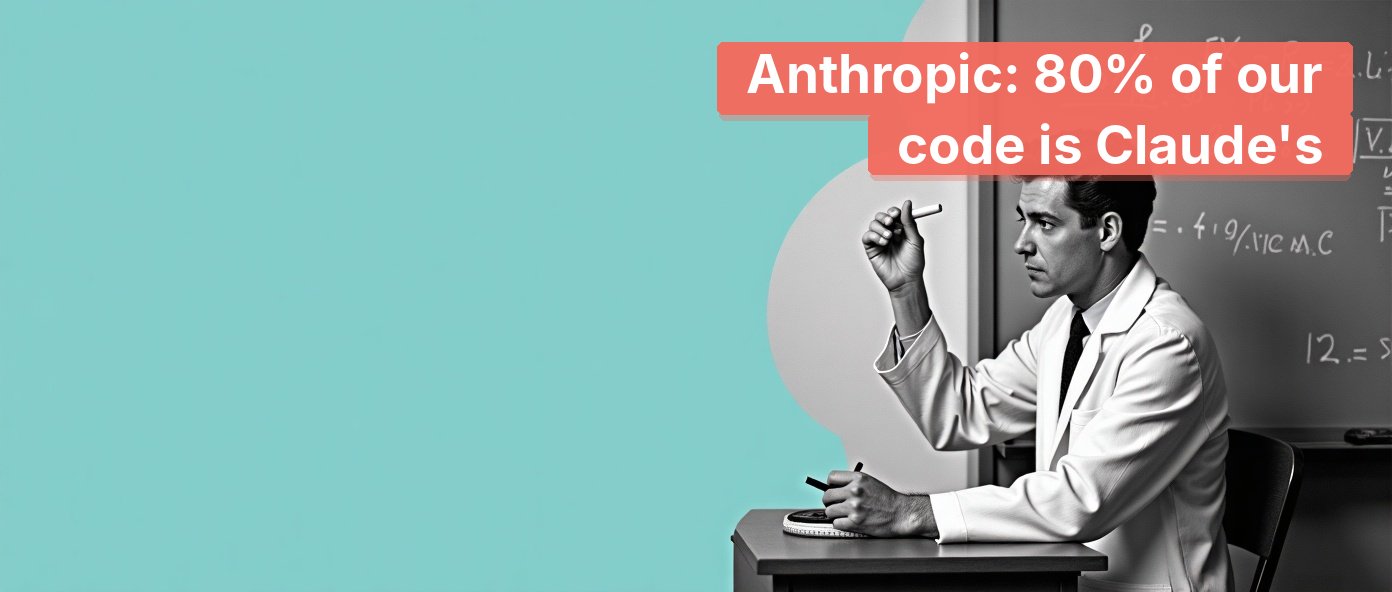
What happened. The Anthropic Institute released "When AI Builds Itself," a research and policy note arguing that recursive self-improvement (RSI) is no longer a purely theoretical concern. The headline internal figures: as of May 2026, Claude authored more than 80% of code merged into Anthropic's production codebase, up from low single digits before Claude Code's February 2025 preview; the typical Anthropic engineer is now merging roughly 8x as much code per day as in 2024; Claude's success rate on the most open-ended internal engineering tasks reached 76% in May 2026, up roughly 50 points in six months. On a recurring internal benchmark that asks the model to speed up a training script, Claude Opus 4 averaged a 3x speedup in May 2025; "Mythos Preview," Anthropic's current frontier model, reportedly hit ~52x by April 2026. Anthropic also stated explicitly that "it would be good for the world to have the option to slow or temporarily pause frontier AI development" if verification mechanisms among labs can be built.
Why it matters. The piece reframes the safety debate around concrete operational data rather than speculative timelines. As the WSJ flagged, Anthropic — reportedly valued near $1 trillion and approaching an IPO — is calling on peers to consider pausing precisely when commercial pressure to accelerate is highest. The "Mythos" numbers, if they hold up, also reset expectations for what "frontier" means: a model giving better next-step research suggestions than humans 64% of the time on sessions where the human had taken a wrong turn is a different category of tool than a code assistant.
Who is affected. Frontier labs face renewed pressure to articulate their own RSI posture; policymakers gain a credible industry source citing internal metrics rather than benchmarks alone; enterprise buyers get a clearer sense of how much of an AI lab's own engineering is now AI-authored. As Latent Space noted, the post landed alongside criticism that Anthropic recently softened parts of its Responsible Scaling Policy thresholds on bio/chemical risk — a tension worth tracking.
What to watch next. Whether OpenAI, Google DeepMind, xAI, or Meta respond with comparable internal disclosures; whether Anthropic's promised convenings produce a credible verification proposal; and whether GitHub's reported volume surge — roughly 14 billion commits projected for 2026 versus 1 billion in 2025, per Anthropic's footnote — forces infrastructure providers to disclose their own AI-authored share.
Sources:
- HN · 461↑ — When AI Builds Itself: Our progress toward recursive self-improvement — Hacker News
- Anthropic calls for top AI labs to weigh slowing or temporarily pausing development, suggesting that self-improving AI systems may soon pose societal risks (Wall Street Journal) — Techmeme
- [AINews] not much happened today — Latent Space
- not much happened today — smol.ai News
2. WIRED and an independent researcher find a complete on-device face-recognition stack — "NameTag" — inside Meta's Stella app

What happened. WIRED reported, with corroborating technical work from EFF's Cooper Quintin and reverse-engineer "Buchodi," that Meta's Stella companion app for its Ray-Ban and Oakley smart glasses — installed over 50 million times — contains a fully wired, dormant on-device facial recognition system internally called NameTag and surfaced in newer builds as "Connections." Three ExecuTorch models ship to phones via Meta's NMLML asset-delivery system: an SCRFD-family face detector, a keypoint aligner, and an SFace-family embedder producing 2,048-dimension biometric fingerprints. A SQLite database at person_profiles/objects.db, using the sqlite-vec extension with cosine distance and a float[2048] index dimensioned to match the embedder, sits inside Meta's RLDrive sync namespace. Buchodi ran the pipeline end-to-end on a test image of Michel Foucault and triggered an Android notification reading "Person recognized." Unrecognized faces are written as (uuid.jpg, uuid.emb) pairs to a NameTagsPending/ directory at mode 0700, surviving reboots.
Why it matters. Meta told WIRED in April it was still "thinking through" facial recognition and would take "a very thoughtful approach"; Buchodi's analysis of com.facebook.stella v273.0.0.21 shows the apparatus was being assembled on user devices as early as January. Meta has already paid $650 million to settle an Illinois biometrics class action and $1.4 billion to Texas over Facebook's previous face-tagging system, which it claimed to have shut down in 2021. Shipping the runtime — even dormant — to 50 million phones changes the regulatory surface area considerably. As Boston University's Woodrow Hartzog noted to WIRED, even opt-in consent provides thin protection once the capability is normalized.
Who is affected. Ray-Ban Meta and Oakley Meta wearers; bystanders who would be the subjects of recognition; EssilorLuxottica, which manufactures the glasses and did not respond to WIRED; regulators in Illinois, Texas, and the EU, all of whom have prior enforcement records against Meta's biometrics. The 70-plus advocacy groups, including the ACLU and EFF, that demanded Meta scrap NameTag in April now have concrete code to point at.
What to watch next. Whether the fb-viewapp://name_tags destination screen — currently missing from the navigation graph — appears in a future Stella release; whether Meta begins server-pushing identity data to the person_profiles namespace; and whether state AGs or the FTC move on the gap between Meta's public statements and its shipped binaries. Meta spokesperson Ryan Daniels told WIRED "nothing has shipped to consumers and no final decision has been made," and that the company is "not building a central face database."
Sources:
- Meta Silently Added Face-Recognition Code for Its Smart Glasses to Millions of Phones — Wired
- HN · 273↑ — Meta's ships facial recognition on smart glasses — Hacker News
- Analysis: Meta discreetly added code for an unreleased "NameTag" face-recognition system for its AI glasses over multiple updates to the Meta AI app this year (Wired) — Techmeme
3. Cloudflare acquires VoidZero, taking custodianship of Vite, Vitest, Rolldown, and Oxc

What happened. Cloudflare announced that VoidZero — the company founded around Evan You's work on Vite and now home to Vitest, Rolldown, Oxc, and the Vite+ toolchain — is joining Cloudflare, with the entire team moving over. The acquisition follows Astro's earlier move to Cloudflare this year. Cloudflare committed that the projects will remain MIT-licensed, vendor-agnostic, and community-driven, with Evan You and the existing team continuing to lead them, and pledged $1 million to a Vite ecosystem fund administered by the Vite core team. The post also lays out longer-term plans to rebuild Cloudflare's cf CLI on top of Vite, so that cf dev becomes a superset of vite dev.
Why it matters. Vite sits under Vue, SvelteKit, Nuxt, Astro, Solid, Qwik, Angular, React Router, TanStack Start, and even a Vite-based Next.js implementation (vinext). Cloudflare cites roughly 129M weekly downloads for Vite and nearly 14M for the @cloudflare/vite-plugin. Concentrating commercial stewardship of that foundation under a single infrastructure vendor — even one publicly committing to neutrality — is a structural shift in the JavaScript supply chain. Cloudflare's framing emphasizes that AI-generated applications increasingly default to a Vite stack, which is consistent with the agent-tooling trend documented in Latent Space's recap of the same day: harnesses, eval infrastructure, and CLI ergonomics matter more when agents are the primary callers.
Who is affected. Maintainers of the major frameworks that depend on Vite; the broader Node and edge-runtime ecosystem, including Vercel, Netlify, Deno, and Bun, who now compete with a Cloudflare-employed Vite core team; and any enterprise standardizing on Vite-based stacks. The Environment API work — which lets Vite run server code inside non-Node runtimes like Cloudflare's workerd during local development — is the technical lever Cloudflare is most likely to extend.
What to watch next. Governance signals: whether contribution patterns and roadmap discussions stay genuinely vendor-neutral over the next year; how rival platforms respond, particularly Vercel given Turbopack and Next.js's competitive overlap; and how quickly the promised cf CLI rebuild lands in stable form. The $1M ecosystem fund's distribution mechanics will also be a useful credibility test.
Sources:
Closing
Three layers of the stack moved in the same direction today: toward consolidation of capability and toward visibility into how much of the work is being done by machines or for them. Anthropic's note quantifies how much of frontier AI development is already AI-mediated; Meta's Stella binaries show a consumer biometrics system pre-assembled at scale, waiting on a policy decision rather than an engineering one; and Cloudflare's acquisition of VoidZero acknowledges that the toolchain agents reach for first is now itself strategic infrastructure. The connective tissue is leverage — over models, over identity, over the build step — and each event tightens the question of who is accountable for using it.